
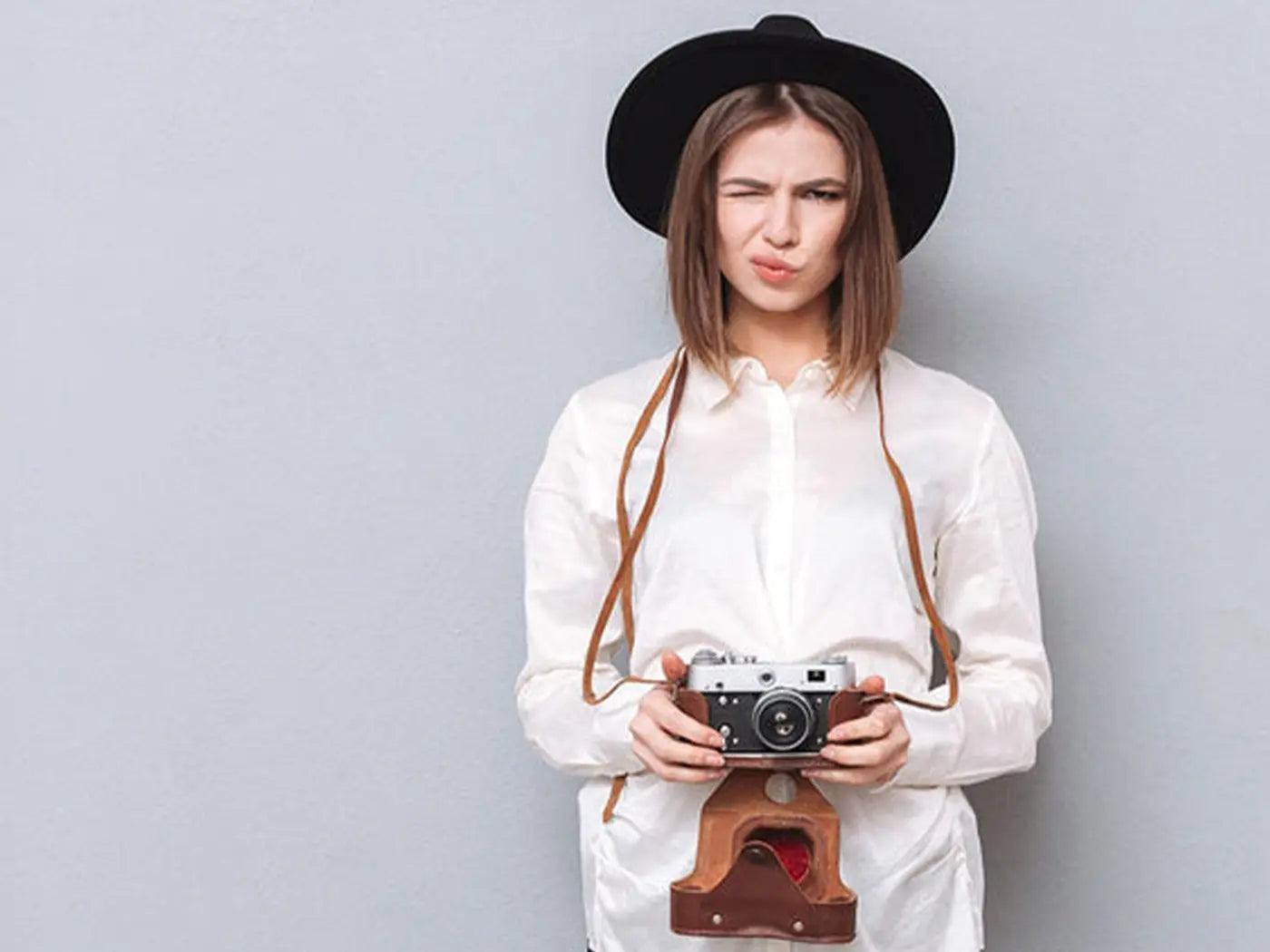
Photography has become increasingly popular in recent years, and there are many reasons for this. For example, equipment has become more affordable, and technological advancements make it easier to take beautiful photos. In the past, you had to have a film developed and didn't know what the finished picture would look like. Today, you can see the image on the screen right away. The problem is that when something becomes so fast-paced, it loses its value. Fortunately, there are many photographers for whom photography is a true craft. And since no master is born overnight, we will highlight common misconceptions and mistakes that can be made in photography. If you also make some of these mistakes, please don't feel bad. We all make mistakes, and that's a good thing. These mistakes are particularly common:
1. Buying a DSLR is enough to become a good photographer
Many people believe they are good photographers because they own a DSLR camera. This is, of course, incorrect. Buying a sports car doesn't make you a race car driver. Therefore, buying a new camera doesn't automatically make you a professional photographer. Photography is an art, and this art must be learned by beginners in photography.
2. Expensive cameras and larger lenses make us better photographers
This is the second misconception one has in photography. When you see a good photo, you often ask the photographer what camera they have, and not how much time and effort they put into creating such a beautiful image. This is like asking a famous painter what colors and brushes they used for the masterpiece that was just auctioned for 10 million euros. So, buying an expensive body and larger lenses doesn't make you a better photographer. You need to invest time to learn, practice, and utilize the full potential of your equipment.
3. Higher megapixels mean better image quality
This is also a misconception among many photography beginners. They believe that a camera with more megapixels delivers better image quality. However, this assessment is not the user's fault, because nowadays all mobile phone companies only talk about megapixels in their advertisements. Megapixel is only the size of the image. So, if a camera stores 6000 x 4000 pixels in an image, that means 6000 x 4000 = 24,000,000 pixels. So it's a 24-megapixel camera. The image quality depends on the sensor size, the lens, the light, and many other factors.
4. We don't need to read the manual that comes with the camera
Life is very fast-paced these days. And when we buy something, we usually don't have time to read boring manuals. That's why most people don't even use 10 percent of their camera's features. If someone always uses their high-quality DSLR in full auto mode, it's like driving a Maserati always in first gear. That way, they will never learn anything about their car's top speed.
5. We learn nothing about the basics of photography
Let's try an experiment. Look at different Instagram pages, and you're guaranteed to quickly discover photos with poor exposure and bad composition. Why? Because the basics of photography, such as exposure times, ISO values, or apertures, are often not yet internalized. If you want to be an experienced photographer, you need to learn important fundamentals. You need to learn to see light and how to use it correctly. You should also learn the rules of composition, know the golden ratio (the rule of thirds), and compose your subject accordingly. For example, if you can incorporate a story into photos, you've already gained a lot. Nowadays, everyone has a camera or smartphone in their hand and takes hundreds of photos. So, if you want to stand out, you need to make your photos extraordinary. And you can only do that if you know what you're doing. So, you should learn photography, take some photography courses, workshops, or online photography courses, and try out the best tips from the internet. And if you see amazing photos with a wow factor, try to find out what the photographer did differently, or what makes a perfect photo.
6. We don't think before we photograph, because we believe photography is free
Whether we're shooting with a DSLR or a phone, these days we don't really think about it because it seems free. We don't have to buy a roll of film; we can take as many photos as we want. And if the photos aren't good, we can just delete them. And honestly now: Do you think that way too? Because photography is absolutely not free if you're shooting with a DSLR. Every DSLR has a shutter that starts to have problems after a certain number of actuations. So, with every bad photo, you reduce the lifespan of the shutter and the camera. Let's say you went for a photo walk and took 250 photos, but only 20 photos turned out well. Then you wasted 230 shutter actuations and still have to buy storage media to keep the great photos. And if you decided to delete the 230 bad photos to save space, then you have to waste your valuable time, which you could also use for more important things.
7. Excessive use of post-processing software
In analog photography, photographers used to spend hours in a darkroom to enhance the photos from their analog cameras. Nowadays, this work can be easily done with image editing software. And when something becomes so easy, it's misused. In this case, post-processing software is used as a correction for bad photos, which shouldn't really be the point. "Take a picture if you made a mistake and then just correct it in the software." We should move away from this idea. The software is only there to improve the image and should not be used too much. For example, always remember that intensifying color doesn't always automatically result in a better image, and black and white isn't automatically the solution for an image with poor colors. And not every image looks good in HDR.
8. No backup of your precious artwork
You should not make this costly mistake. Always properly index your images and keep a backup either online or on external hard drives so that you don't lose your valuable work and can easily find it when needed.
9. Focusing on one type of photography
Every genre of photography requires a different type of equipment and skill set. For wildlife, for example, you need a super-telephoto lens; for landscape photography, you need a wide-angle lens; for portraits, possibly an artificial light source like a flash or studio light. So, for a beginner in photography, looking around in every area definitely can't hurt, because you learn different techniques that you can then apply to other areas.
10. Too much theory, too little practice
Many photography beginners spend too much time on the internet getting lost in looking at other photographers' pictures. If you do that, you should stop. As a photo beginner, learn one thing at a time and, most importantly, apply it yourself. And important: keep going until you have the results you envisioned. Once that's the case, learn the next technique.
So get started! Practice with your camera, keep the technical basics in mind, venture into manual mode, and learn the photographic possibilities your camera offers. It's worthwhile to try out short exposure times or even long exposure times for long exposure. Soon you will be taking even better photos and impressing your acquaintances with great pictures.


Share:
Photographing Reflections: 9 Tips for Stunning Reflection Photos
Photographing a Lunar Eclipse – The Complete Guide