
Landscape and travel photographers quickly realize that the tripod is just as important as the camera. However, individual photographers' needs differ: A travel photographer will hardly be persuaded to carry around a heavy three-legged aluminum tripod.
Just a few years ago, there were hardly any professional solutions for this particular need, but now the market offers numerous options.
We will be testing one of them, the new Compact Traveler No.1 Carbon travel tripod from Rollei. This tripod fits perfectly into the landscape and travel photography niche, as it is easy to transport without compromising on quality (no, my blog will never feature a review of plastic tripods from Hama or similar).

The packaging already hints at the features revealed in the product data sheet:
• Weight: 0.98 kg
• Packed size: 33 cm
• Maximum height: 142 cm
• Minimum height: 34 cm
• Maximum load capacity: 8 kg
The equipment is generous. In addition to the tripod and operating instructions, it includes:
• Ball head
• Carrying bag
• Shoulder strap
• Tools and spare parts
Anyone who uses Manfrotto, like me, will be pleasantly surprised by this.

As you can see in the image above, not only are the necessary tools for completely disassembling the tripod included, but there are also spare rubber feet, which, as we all know, are invaluable!
Let's take a closer look at the Compact Traveler No. 1 Carbon.
After opening the tripod, we notice some interesting features:
1. The travel tripod consists of four segments. This shows why the packed size is so compact, even with a maximum working height of 142 cm.
2. All segments are made of carbon fiber, all connecting elements are made of magnesium, whose low density and high specific strength ensure the low weight.
3. The segments can be shortened using a quick-release fastener; a small turn of the latch and the leg drops to the desired height, another turn in the opposite direction blocks the position. I was particularly impressed by this fastener, and we'll see why later.
4. The angle of the legs can be adjusted by "press-release," meaning you only need to press a certain plate, then the leg is freely adjustable. As with most professional tripods, there are three operating positions in the range of 50° to 180°.

5. The center column does not reach the ground. This is excellent because it increases the maximum working height without restricting the opening angle of the legs, which can reach a 180° angle.
6. On the frame of the tripod, where the legs are attached, there is a hook where you can hang your backpack (or a weight). This feature is often underestimated, but when you put the tripod on a cliff in strong winds, it's a completely different story!

7. On the frame of the tripod, where the legs are attached, there is a hook where you can hang your backpack (or a weight). This feature is often underestimated, but when you put the tripod on a cliff in strong winds, it's a completely different story!

8. The ball head is Arca Swiss compatible, which means it is compatible with practically infinitely many adapter plates, should the included plate (which is excellent) not be to your liking for any reason. There is a spirit level on the head; a great feature for people like me who can't get a straight horizon without help!
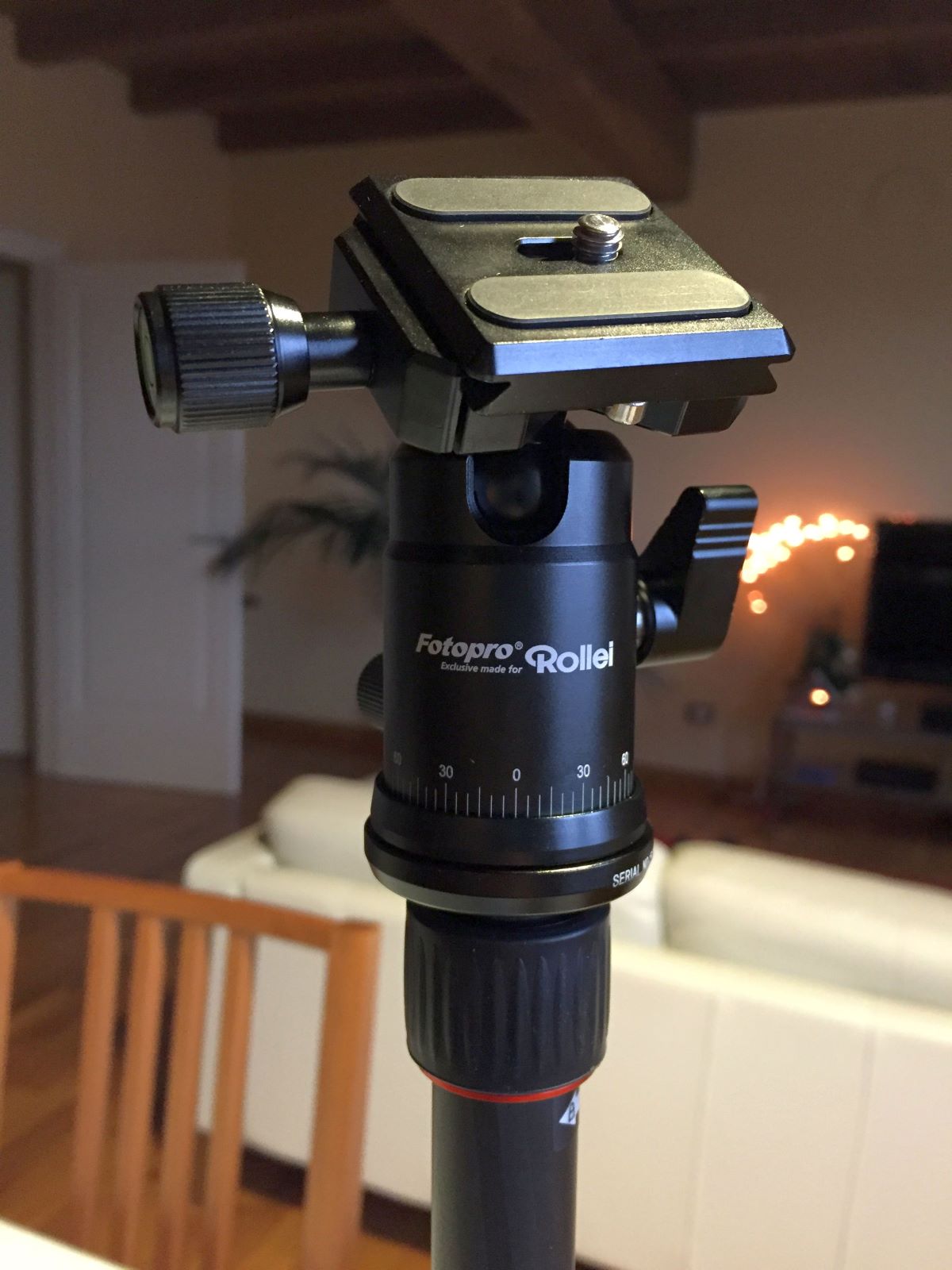
9. And the biggest surprise: one of the three legs can be removed and mounted directly to the ball head to turn the tripod into a monopod!

The carbon travel tripod is beautiful and well made.
Let's take a closer look…
One of the most important (and most underestimated) features of a tripod is its ease of maintenance.
One thing I particularly like about this tripod is how easily it can be disassembled. In particular, the leg segments can be quickly removed and cleaned (unlike Manfrotto tripods, which require time, patience, more time, and a photo guide to reassemble all the parts without forgetting anything).
After disassembling a leg, an astonishing feature comes to light: In addition to the Teflon bush that allows guiding and adjusting between the individual legs, there are three seals! These prevent sand or other solid particles from entering the upper leg segment, thus preventing scratches and jamming of the leg! Given the circumstances of how and where I use my tripods, this dust protection alone justifies the purchase!

Even in the first test, the carbon travel tripod performed excellently; in practice, the tripod truly demonstrates its advantages. The tripod fits easily into a normal backpack or rolling suitcase
(exactly: perfect for Easyjet and Ryanair!), and with the shoulder strap, it becomes truly comfortable. Outdoors, the four segments of the tripod adapt to any surface: from rocks to narrow standing areas, I haven't encountered a situation where there wasn't a solution.

Anyone who thinks such a small and light tripod would not be suitable for their DSLR camera is mistaken: I would like to remind you again that the maximum load capacity is 8 kg, which means the tripod can easily carry a DSLR camera with a medium telephoto lens.
I conducted my tests with a Nikon D810 and Zeiss Distagon T * 2.8 / 21. With this configuration, the Compact Traveler No. 1 Carbon proved to be much more stable than expected. This (probably not very scientific) recording of vibration impulses (with a finger on a leg) on the tripod is the proof: after less than 1.5 seconds, the vibration is completely reabsorbed!

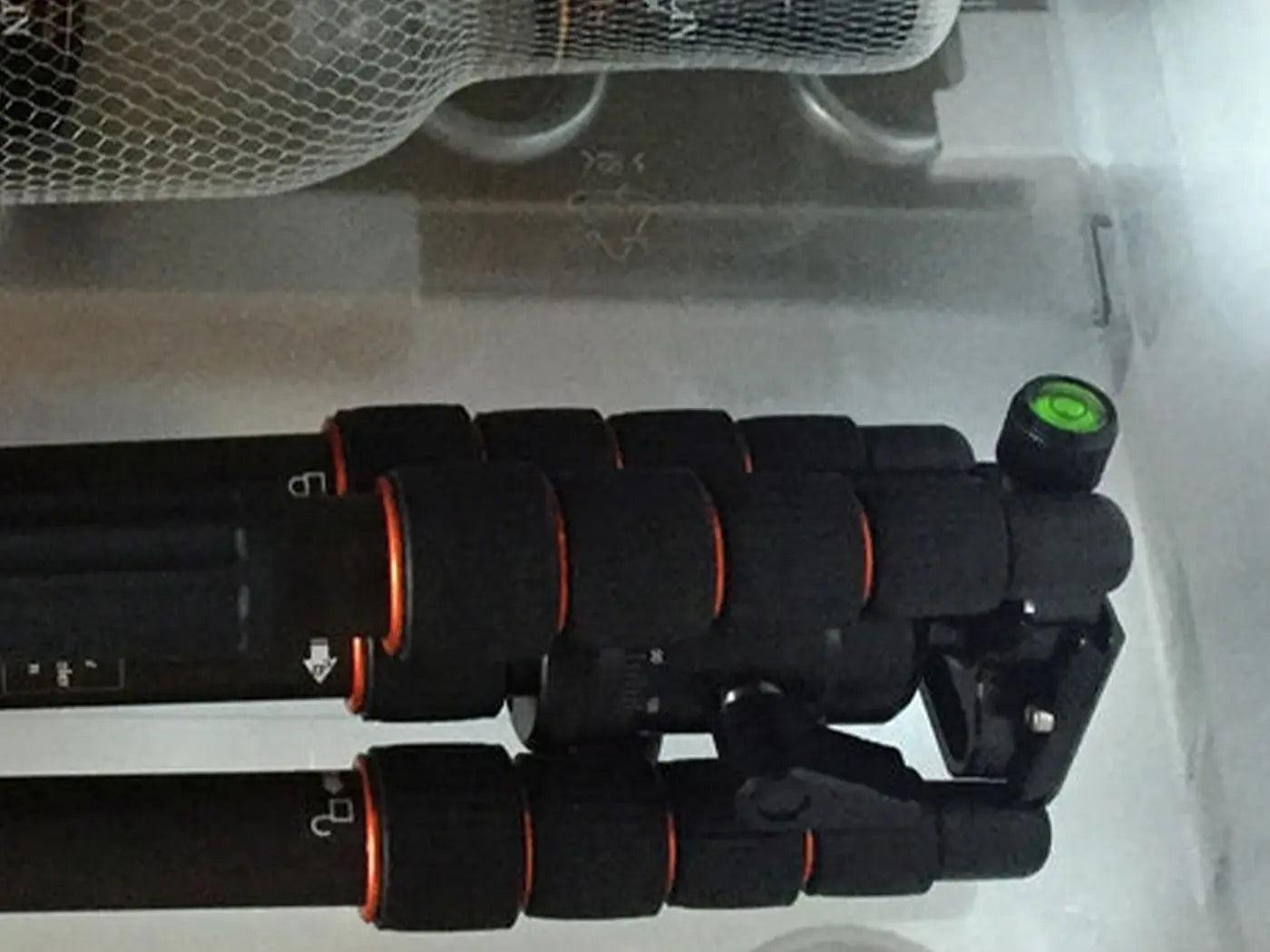
Since there was a legitimate doubt about the behavior of the tripod at low temperatures, I conducted another (completely unscientific) test: 48 hours in my freezer!

The result is interesting as it highlights the quality of the material used: The tripod is usable even when completely frozen, as every part moves normally. The Teflon guides allow the legs to slide smoothly, and the magnesium leg angle selector is not blocked! Even the ball head works and slides smoothly.

Conclusion
The Compact Traveler No. 1 Carbon from Rollei is a surprise in every respect. Light, compact, and reliable: these three words perfectly describe the product. For the landscape or nature photographer, it certainly doesn't replace their usual working tripod, but as a backup or travel tripod, I can hardly imagine a more suitable product!
Share:
Aperture – Measure of a lens's light-gathering ability
Product Photography: 8 Tips for Modern Product Photos